
Lena Turns Reporting into Leverage
A Man Called OveThis thread follows Lena from a reporter’s pursuit of Ove’s story to her use of investigative work to challenge the threatened removal of Rune.
increasing Bearing strength in each event
 decreasing
Bearing strength in each eventdecreasingThe Reluctant Interview
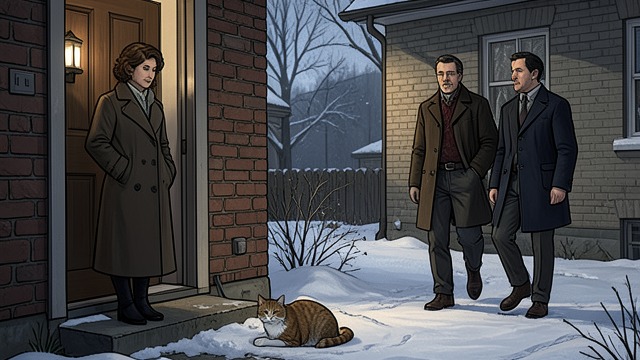
A Reporter at the Garage
Chasing a Local Story
Lena approaches Ove in his garage after he rescues a passenger from the railway tracks. Ove assumes she wants to sell him something and repeatedly tells her that he wants nothing. Lena identifies herself as a journalist and explains that she wants to interview him about the rescue, but his reluctance leaves her outside the story for the moment.
A Difficult Subject
Ove’s refusal is not false modesty staged for an audience; he genuinely dislikes being turned into a public figure. Lena has to find another way to reach him, while Ove remains more concerned with events in his neighborhood than with the attention his action has attracted. Their first encounter establishes the friction that will shape her reporting relationship with him.
A Locked-In Interview
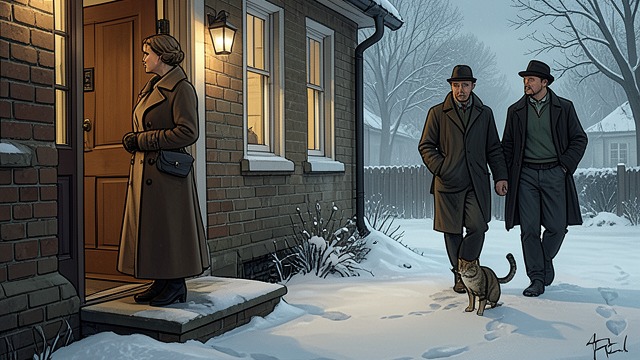
Reporting Through the Garage Door
Ove Evades the Camera
When Lena persists at Ove’s house, he pushes her back outside and then tries to escape with The Cat. He ends up locking himself and the journalist in the garage, while she continues to call out that he is a hero. The situation exposes the comic mismatch between Lena’s determination to get a story and Ove’s conviction that attention is an intrusion.
Parvaneh Intervenes
Parvaneh arrives and offers to help Lena get out if Ove gives the family a lift to the hospital. Ove accepts the bargain, but Lena has not been silenced or made to disappear. Parvaneh simply establishes a channel for later contact, turning the accidental confinement into the beginning of a less adversarial exchange.
An Interview on His Terms
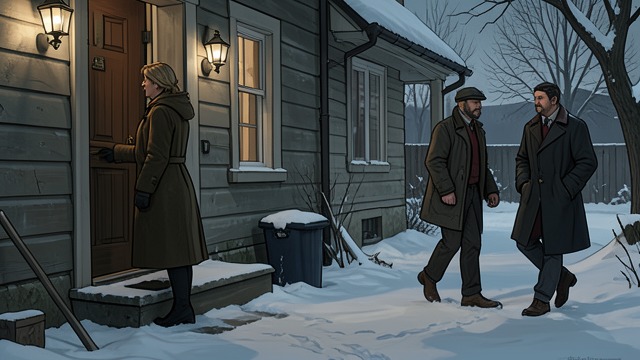
The Story Goes to Print
A Reluctant Agreement
Lena eventually secures an interview with Ove, who keeps his dislike of the process plain and refuses to perform a cheerful version of himself for the camera. She reports on his rescue of a man who fell onto the tracks, presenting an act Ove considers ordinary as an event worth public attention.
A Private Thank-You
The rescued man sends Ove a letter and a photograph of his family, explaining how much the intervention meant to them. Ove discards the letter with the advertising but keeps the photograph on his refrigerator beside Nasanin’s colorful drawing. The story’s consequences reach him most effectively not as praise, but as evidence of a family whose future was changed by what he did.
Investigating the White Shirt
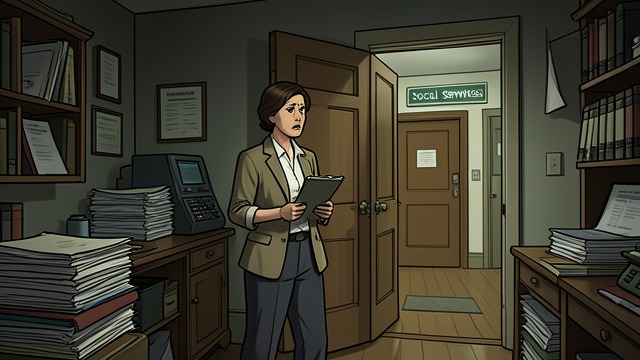
Research Against Bureaucracy
A New Use for Journalism
When Social Services prepares to take Rune into care, Lena joins the neighbors at Anita’s door. She has assembled records concerning earlier care placements and irregularities in the procedures overseen by the official handling Rune’s case. Her reporting shifts from documenting Ove’s unexpected heroism to examining the power exercised by an institution.
Delaying the Transfer
Lena explains that public scrutiny could force the officials to spend months or years navigating their own procedures. Her warning gives the group a way to resist without pretending that a single confrontation has permanently defeated the system. The story demonstrates how investigation can turn bureaucratic records into leverage for people whose private appeals have been ignored.
A Reporter Becomes Family
Beyond the Newspaper
A Shared Public Stand
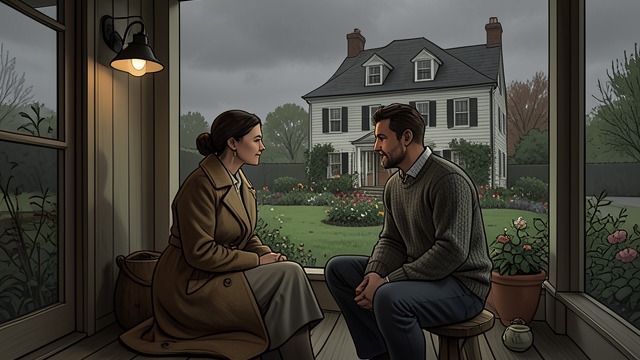
Lena remains connected to the residents after the immediate confrontation, having used her professional skills to support a cause that matters to them. Her presence changes how Ove regards her: she is no longer only the journalist who intrudes on his privacy, but someone willing to challenge officials when people are at risk.
A Life Along the Street
By autumn, Lena moves in with Anders. Ove drives the moving van because he does not trust the couple to maneuver it between the houses without damage. Her change from persistent reporter to neighbor reflects the book’s recurring shift from distant observation toward participation in a community.
The day after Ove saves a man at the railway station
Later that week
Several days after the station rescue
After Social Services schedules Rune’s transfer
The months following the confrontation at Anita and Rune’s house
